
Wind Hazards at Elevation: What Every Contractor Needs to Know
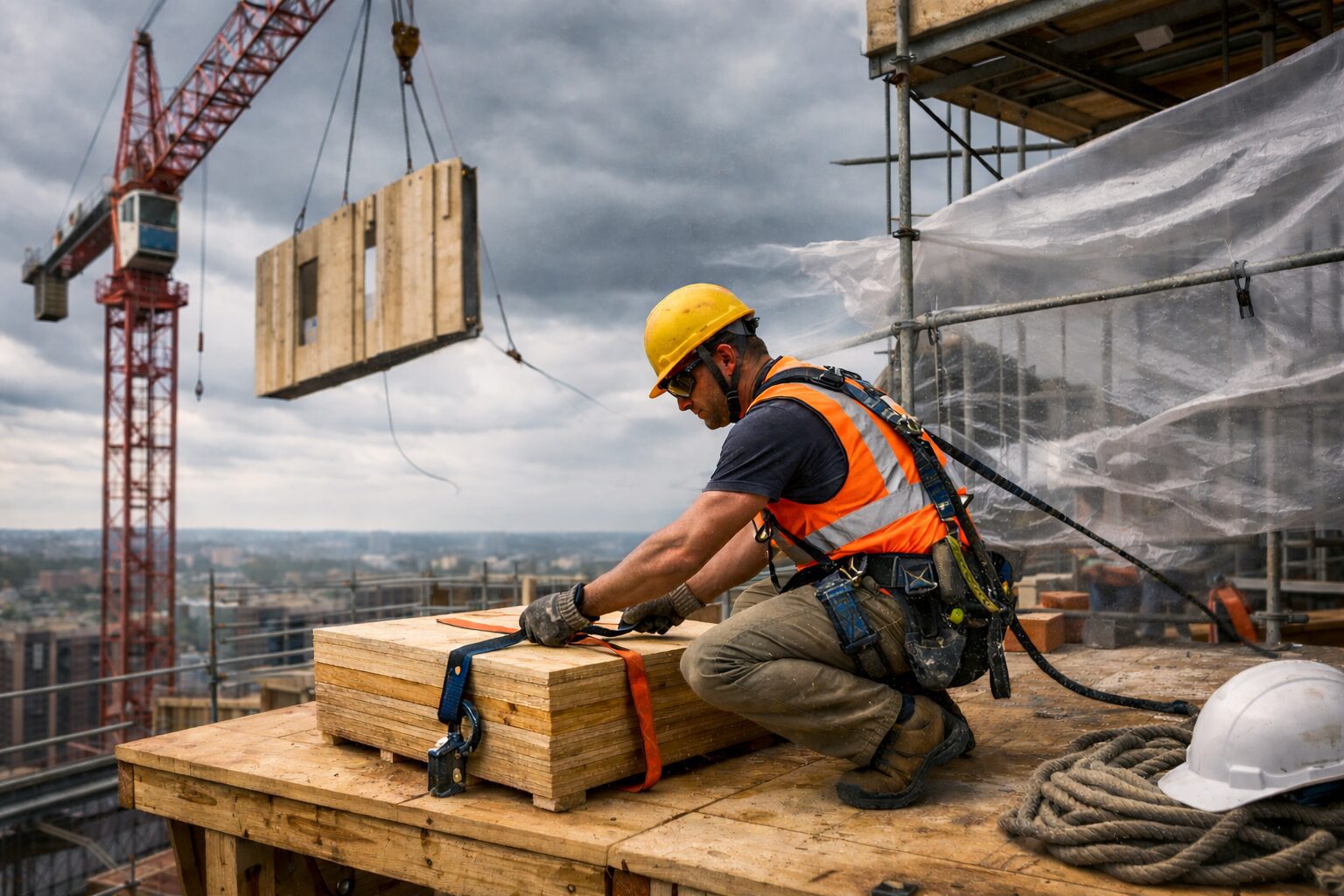
Wind is one of the most underestimated risks on elevated construction sites. From multi-story framing and roofing to scaffold work and crane-assisted lifts, even moderate wind speeds can quickly create dangerous conditions. Our new safety resource, “Wind Hazards at Elevation: Securing Materials, Lift Limits, and Fall Prevention,” outlines practical, field-ready guidance to help contractors reduce risk and keep crews safe. Below is a summary of the key takeaways — and links to download both the English and Spanish versions.
Why Wind Safety Matters
Wind doesn’t just make work uncomfortable — it changes the physics of the jobsite. It can:
- Turn loose materials into airborne projectiles
- Increase load swing during crane operations
- Reduce worker balance and ladder stability
- Elevate fall risks on roofs and scaffolds
Without clear thresholds and planning, wind-related incidents can lead to serious injuries, property damage, and project delays.
1. Securing Materials at Height
Unsecured materials are one of the most immediate hazards during windy conditions.
Best practices include:
- Storing materials away from roof edges and perimeters
- Keeping loads evenly distributed and properly stacked
- Using banding, shrink wrap, or strapping on loose items
- Securing lightweight materials (insulation, sheathing, house wrap) immediately
- Tethering tools and using debris netting or toe boards on scaffolds
- Establishing controlled access zones below elevated work areas
- Monitoring forecasts and reassessing material security when gusts exceed safe limits (often 20–25 mph, depending on material type)
2. Lift Limits & Crane Operations
Wind significantly affects lifting operations. It increases load swing, reduces crane stability, and places additional strain on rigging systems — particularly when lifting materials with large surface areas.
Key recommendations include:
- Never exceeding manufacturer wind speed limits
- Considering both sustained winds and gusts
- Reducing load size as wind speeds approach limits
- Avoiding large flat panel lifts during elevated winds
- Using tag lines to control rotation and swing
- Designating one qualified signal person
- Stopping work immediately if load control is compromised
Clear stop-work triggers — such as sudden gusts, uncontrolled swing, or communication breakdown — are critical for preventing incidents.
3. Fall Prevention in Wind Conditions
Wind directly impacts worker stability and increases slip potential, especially on roofs and scaffolds.
The resource reinforces:
- Proper use of guardrails, personal fall arrest systems (PFAS), and safety nets
- Daily inspection of harnesses, lanyards, and anchor points
- Securing scaffolding per manufacturer requirements
- Fully planked platforms and guardrail systems
- Avoiding ladder use in high winds whenever possible
- Maintaining three points of contact
- Postponing roofing or sheathing installation during strong gusts
- Requiring slip-resistant footwear
When wind speeds rise, fall protection protocols must be reinforced — not relaxed.
Establish a Wind Action Plan
Every jobsite should implement a written Wind Safety Plan that includes:
- Defined wind speed thresholds for specific tasks
- Stop-work authority for supervisors and crew leads
- Clear communication protocols
- Daily safety briefings tied to forecasted conditions
- Emergency procedures for sudden severe weather
Empowering crews to make safety-first decisions is essential. Schedule pressure should never override safe operating limits.
Final Takeaways
- Secure it or lose it: Every item at elevation must be restrained.
- Know your limits: Follow manufacturer wind ratings.
- Prevent the fall: Reinforce fall protection during high winds.
- Empower stop-work decisions: Safety always comes first.
Wind hazards at elevation are preventable with preparation, vigilance, and leadership commitment. Integrating these practices into daily operations strengthens both jobsite safety and industry standards.