

Respiratory Protection Readiness: Fit Checks, Maintenance, and When It’s Required
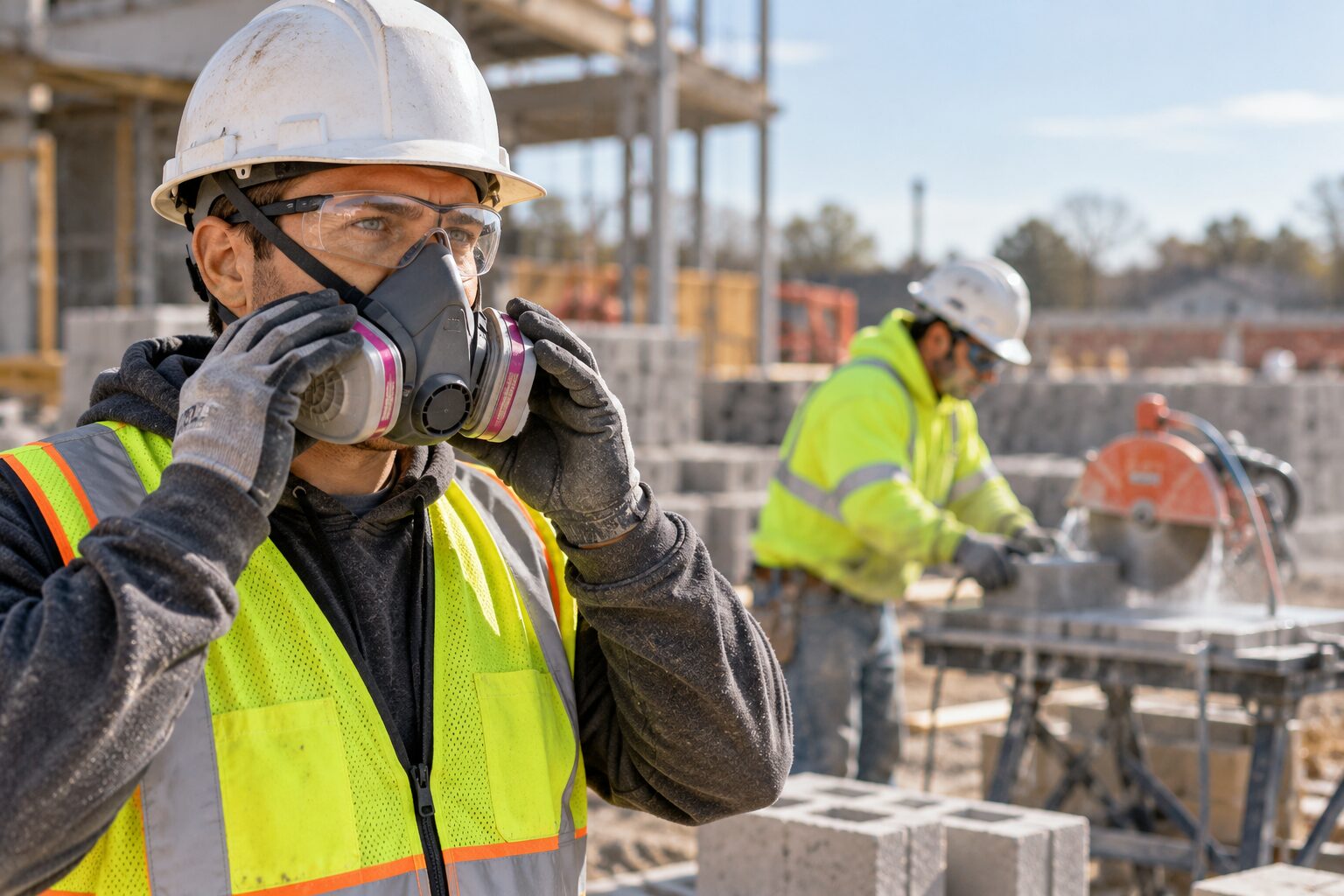
Protecting Your Lungs Starts Before the Work Begins
Construction and industrial workers routinely encounter airborne hazards that can threaten their respiratory health. Cutting concrete, grinding masonry, welding, demolition, and working around chemical vapors can expose employees to harmful dust, fumes, and other contaminants.
While these hazards are not always visible, their effects can be serious and long-lasting. Proper respiratory protection can help prevent occupational illnesses—but only when the right respirator is selected, maintained, and worn correctly.
For contractors, supervisors, and safety managers, respiratory protection readiness should be an essential part of job planning and daily safety practices.
When Is Respiratory Protection Required?
Respirators are not necessarily required for every dusty task. Their use depends on the hazards present, applicable OSHA requirements, and the effectiveness of other protective measures.
Examples of work activities that may require respiratory protection include:
- Concrete cutting, drilling, and grinding: Activities that generate respirable crystalline silica dust.
- Welding and metalworking: Operations that produce hazardous fumes or airborne metal particles.
- Demolition and renovation: Work that may disturb asbestos, lead-containing materials, or other hazardous substances.
- Painting and chemical applications: Tasks involving hazardous vapors, mists, or airborne chemicals.
- Confined spaces and poorly ventilated environments: Situations where dangerous airborne contaminants or oxygen-deficient atmospheres may be present.
Employers should evaluate exposure hazards and prioritize engineering controls, such as wet-cutting methods, local exhaust ventilation, and dust collection systems. When those controls cannot adequately protect employees, or when a specific OSHA standard requires respiratory protection, properly selected respirators must be used. Importantly, ordinary air-purifying respirators do not supply oxygen and must never be used in oxygen-deficient atmospheres.
Fit Testing vs. User Seal Checks: Know the Difference
One of the most important aspects of respiratory protection is achieving a proper seal between a tight-fitting respirator and the worker’s face. Although the terms are sometimes confused, fit testing and user seal checks serve different purposes.
Fit testing determines whether a particular respirator make, model, style, and size fits an individual worker. OSHA generally requires fit testing before initial use, at least annually, and whenever changes occur that could affect the respirator’s fit.
User seal checks, on the other hand, are performed by workers every time they put on a tight-fitting respirator. These checks help verify that the respirator is properly positioned and sealed before entering a hazardous environment.
Workers should follow the manufacturer’s approved seal-check procedure and readjust or replace the respirator if an adequate seal cannot be achieved. Facial hair, improperly positioned straps, and other personal protective equipment can interfere with the seal and reduce protection.
Remember: A successful user seal check does not replace required fit testing.
Respirator Inspection, Maintenance, and Storage
Even a properly fitted respirator may fail to provide adequate protection if it is damaged, dirty, or poorly maintained.
Before each use, workers should inspect their respirators for:
- Cracked, torn, or deteriorating facepieces.
- Damaged or stretched straps.
- Missing, damaged, or malfunctioning valves and connections.
- Improperly installed filters or cartridges.
- Other defects that could affect performance.
Reusable respirators should be cleaned and disinfected according to the manufacturer’s instructions and the employer’s respiratory protection program. Filters and cartridges must be appropriate for the identified contaminants and replaced according to the applicable change schedule, end-of-service-life indicators, or manufacturer instructions. Respirators should also be stored in clean, dry locations protected from dust, chemicals, excessive temperatures, moisture, and physical damage. Never continue using a respirator that is damaged or fails an inspection.
Building a Respiratory Protection-Ready Workforce
Effective respiratory protection involves more than distributing masks to employees. When respirator use is required, OSHA generally requires employers to implement a written respiratory protection program that includes appropriate respirator selection, medical evaluations, fit testing where applicable, training, and maintenance procedures.
Supervisors can reinforce these requirements during toolbox talks and pre-task planning by confirming that:
- Airborne hazards have been evaluated and appropriate controls are in place.
- Workers have the correct respiratory protection for the task.
- Required medical evaluations, fit testing, and training are current.
- Respirators have been inspected and user seal checks completed.
- Employees understand when to leave the work area and report respiratory protection problems.
Workers should stop work and move to a safe area if their respirator becomes damaged, breathing becomes difficult, contaminants are detected through the respirator, or a proper seal cannot be maintained.
Make Respiratory Protection Part of Every Pre-Task Plan
Respiratory hazards can be easy to underestimate, especially when harmful dust and fumes are difficult to see. Taking a few minutes to verify respirator readiness before beginning work can help prevent serious long-term health consequences. Kentucky AGC Self Insurers’ Fund encourages members to incorporate respiratory protection checks into regular safety meetings, toolbox talks, and jobsite inspections.
Download our one-page Respiratory Protection Readiness safety resource, available in English and Spanish, to share with your crews.