

Severe Bleeding Control: What Every Construction Crew Should Know
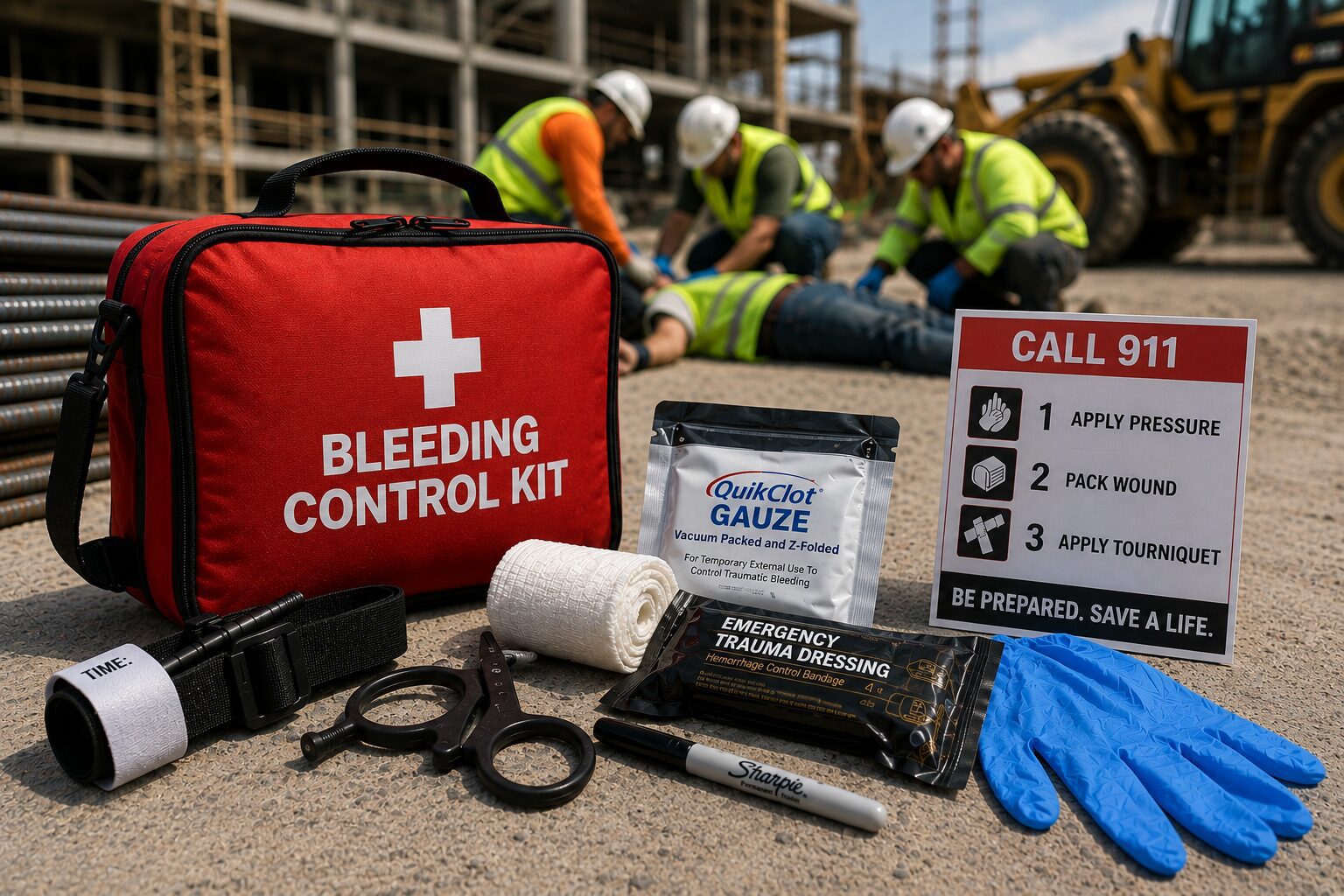
Construction sites are filled with hazards that have the potential to cause serious injuries. Power tools, sharp metal, heavy equipment, falls, struck-by incidents and crushing injuries can all result in severe bleeding. When that happens, every minute counts.
A worker experiencing life-threatening bleeding can lose a dangerous amount of blood before emergency medical services arrive. Knowing how to recognize severe bleeding—and having the right supplies immediately available—can make a critical difference.
Recognizing Life-Threatening Bleeding
Severe bleeding requires immediate action. Warning signs can include blood flowing continuously or spurting from a wound, blood rapidly pooling or soaking through clothing or bandages, a partial or complete amputation, or a deep wound involving machinery, tools, metal or other objects. A person who has lost significant blood may also become pale, confused, weak, drowsy or unresponsive.
When severe bleeding occurs, call 911 immediately and begin bleeding control. If others are nearby, one person should contact emergency services while another begins providing aid.
Three Basic Ways to Control Severe Bleeding
The appropriate response depends on the location and severity of the injury. Three basic bleeding-control techniques are:
Direct pressure: Expose the wound and apply firm, continuous pressure directly over the bleeding site using gauze, a trauma dressing or other clean material. Avoid repeatedly lifting the dressing to check the wound.
Wound packing: Deep wounds in areas where a tourniquet cannot be used, such as the groin or shoulder, may require packing. Gauze is packed firmly into the wound while concentrating pressure at the source of the bleeding. Hemostatic gauze may also be used when available and the responder has been trained to use it.
Tourniquet application: For severe bleeding from an arm or leg, a tourniquet can be applied above the wound according to the manufacturer’s instructions and tightened until the bleeding stops. A properly applied tourniquet can be painful, but it should not be loosened or removed while waiting for EMS.
Hands-on training is important. Workers should have an opportunity to practice these techniques before they are faced with an actual emergency.
What Should a Crew Have Available?
A traditional first-aid kit may not contain everything needed to respond effectively to catastrophic bleeding. Employers should consider supplementing jobsite first-aid supplies with dedicated, clearly marked bleeding-control kits.
A crew bleeding-control kit should include items such as commercially manufactured tourniquets, compressed or rolled gauze, hemostatic gauze or dressings, pressure or trauma dressings, nitrile gloves, trauma shears, a permanent marker for recording tourniquet application time, and basic bleeding-control instructions.
Just as important as having the supplies is having them where workers can quickly reach them. Consider placing bleeding-control kits in company vehicles, gang boxes, job trailers, equipment cabs and other accessible locations. Large jobsites or projects with dispersed crews may require multiple kits.
Preparation Goes Beyond the Kit
Equipment alone isn’t enough. Employees need to know where bleeding-control supplies are located and how to use them. Hands-on training can help workers learn to recognize life-threatening bleeding and practice applying direct pressure, packing wounds and using tourniquets.
Bleeding-control supplies should also be incorporated into routine first-aid inspections. Jobsite first-aid supplies need to remain readily accessible, stocked and ready for use.
Finally, every crew should know how to summon EMS from the worksite, where the nearest bleeding-control kit is located and who has been trained to use it. On large or remote projects, consider whether additional kits are necessary to keep lifesaving equipment within quick reach.
Be Ready Before an Emergency Happens
Severe bleeding is one of those emergencies where immediate action can have a major impact. Preparing ahead of time doesn’t have to be complicated:
Train the crew. Stock the kit. Know where it is. Act fast.
We’ve prepared a one-page resource covering the basics of severe bleeding control and recommended supplies for construction crews. Download the English or Spanish version below and consider sharing it during a toolbox talk, safety meeting or first-aid refresher.