

Preventing Blind-Spot & Backover Incidents
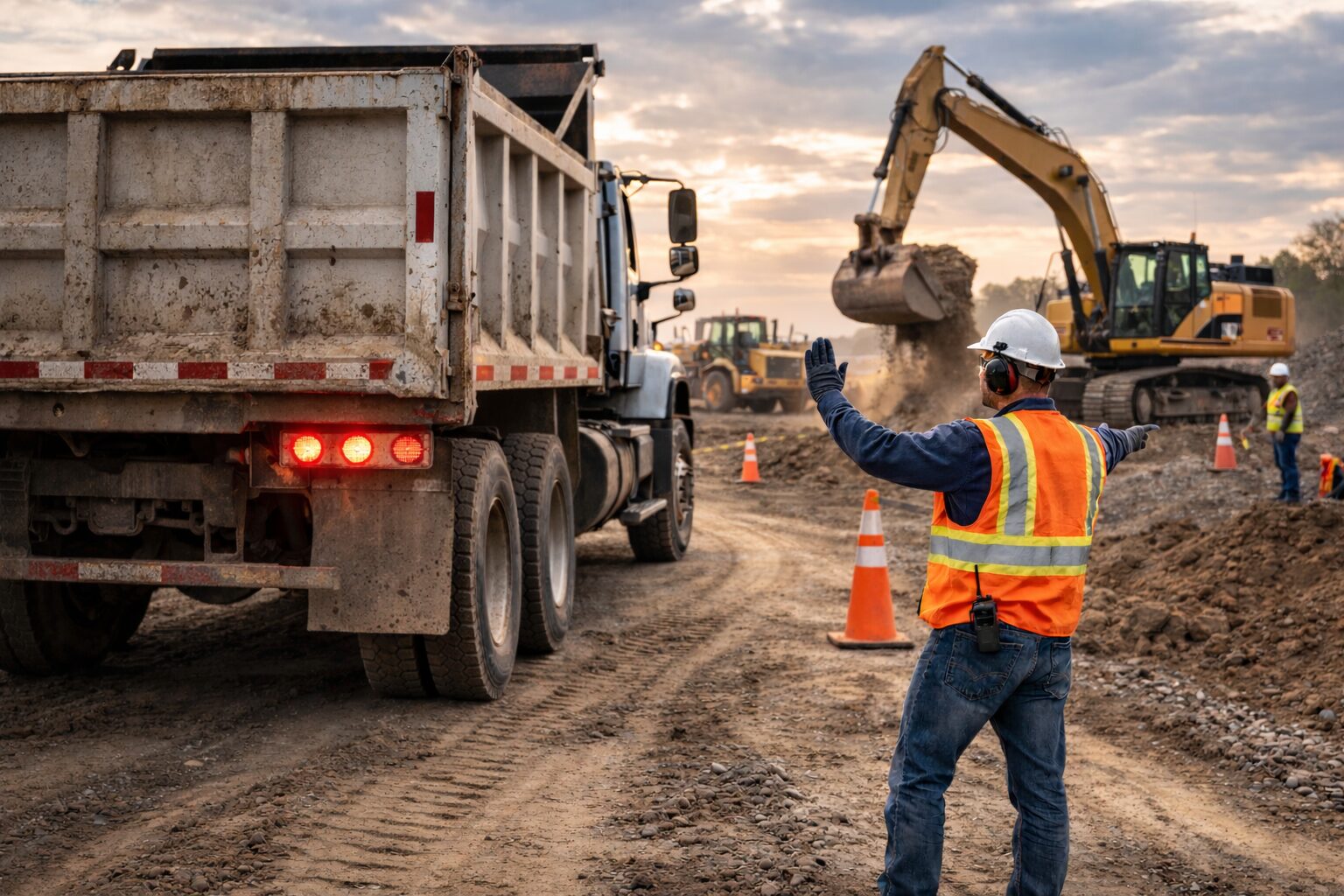
Backover and blind-spot incidents continue to rank among the most serious hazards in construction, aggregates, and roadway work zones. Despite advancements in equipment and technology, workers are still being injured (or worse) by incidents that are both predictable and preventable. Our latest safety resource, “Blind-Spot & Backover Prevention for Dump Trucks and Heavy Equipment” , outlines practical, field-ready strategies to reduce risk and protect both operators and ground personnel.
Why Blind Spots Remain a Serious Threat
Dump trucks, loaders, excavators, dozers, rollers, and haul units operate with significant no-visibility zones. Rear blind areas can extend dozens of feet. Passenger-side blind spots, limited cab visibility, front blind areas near elevated cabs, and swing radius hazards all create dangerous conditions especially on congested jobsites. Add in changing traffic patterns, tight workspaces, multiple trades, weather conditions, and production pressures, and the risk increases dramatically. The key takeaway: mirrors alone are not enough.
The Most Common Risk Factors
Blind-spot and backover incidents frequently involve:
- Repeated backing in tight or congested areas
- Multiple subcontractors working in close proximity
- Inexperienced operators or spotters
- Poor lighting, dust, or inclement weather
- Complacency during routine or repetitive tasks
Recognizing these patterns is the first step toward preventing the next incident.
Practical Prevention Strategies That Work
The document highlights four major areas of focus:
- Reduce or Eliminate Backing: Whenever possible, design traffic flow to allow pull-through movement. One-way patterns and strategic material staging can significantly reduce the need to reverse equipment.
- Use Engineering Controls: Technology should support safe operations including rearview and 360° camera systems, proximity detection or radar alerts, multi-frequency backup alarms, and adequate jobsite lighting. Technology enhances safety, but it never replaces situational awareness.
- Control the Work Zone: Clear separation between equipment and pedestrians is critical. Defined equipment-only areas, marked walkways, barricades, and restricted loading zones reduce exposure and confusion.
- Strengthen Communication Protocols: When backing is necessary, use trained, designated spotters, maintain constant visual contact, stop immediately if contact is lost, and standardize hand signals or communication methods. One spotter per machine is always the safest approach.
Shared Responsibility at Every Level
Preventing blind-spot incidents requires commitment across the organization:
- Operators must conduct inspections, adjust mirrors properly, use the GOAL (Get Out and Look) method, and avoid distractions.
- Ground workers must never assume they are visible and must stay clear of blind zones.
- Supervisors and managers must reinforce that safety outweighs production pressure and continuously review jobsite traffic control plans.
Safety culture starts with leadership—but it succeeds through shared accountability.
Download the Full Resource
Blind-spot and backover incidents are preventable when thoughtful planning, proper equipment, disciplined communication, and leadership commitment come together. Click the link(s) below to access the complete one-page safety document. Make it part of your next safety meeting, toolbox talk, or jobsite orientation and help ensure everyone goes home safely at the end of the day.