

High-Visibility and Night Operations: Lighting, Glare Control, and PPE
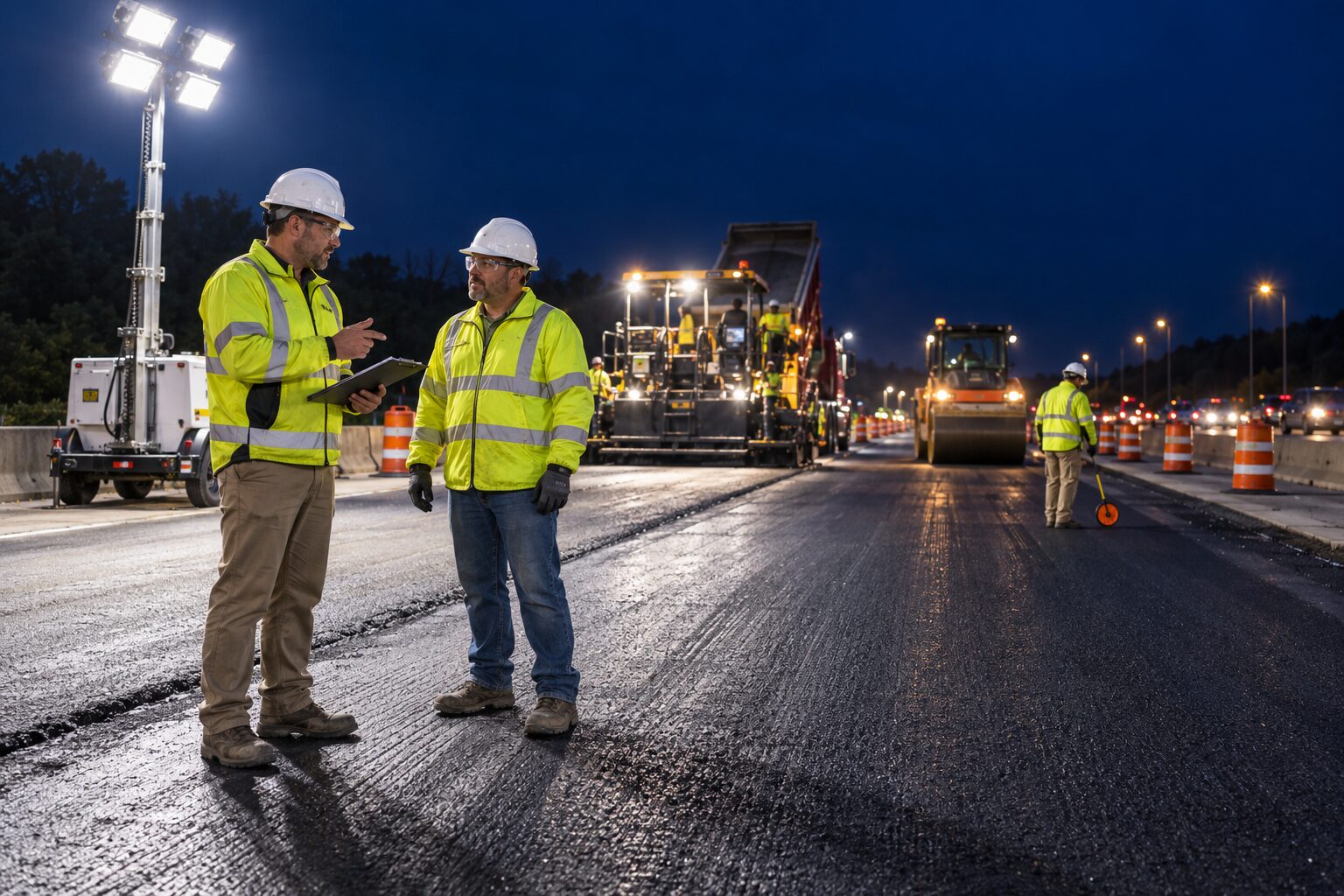
Working after dark brings added challenges to quarry operations, highway construction, paving, and maintenance. Darkness, dust, rain, and moving equipment can make it difficult to recognize workers, judge distances, and spot hazards.
A safer night shift starts with a plan that helps workers see their tasks and helps drivers and equipment operators see the people around them. Effective lighting, glare control, and high-visibility personal protective equipment work together to improve visibility.
Plan the Lighting Before Work Begins
Lighting should cover more than the immediate work area. Crews also need to see equipment crossings, haul routes, loading and dumping areas, walkways, stairs, edges, and emergency exits. Roadway operations should account for flagger stations and work areas that move throughout the shift.
Combine general area lighting with task lighting where needed. Overlapping coverage helps reduce deep shadows around trucks, loaders, pavers, and conveyors. Equipment headlights and personal lamps can supplement lighting, but they may leave important areas dark.
Assign someone to inspect the lighting before work begins and after equipment moves or conditions change. Follow applicable OSHA or MSHA requirements and project specifications, and plan for backup lighting and a safe response to power loss.
Light towers also need safe placement. Set them on stable ground, secure them according to the manufacturer’s instructions, maintain required clearances from power lines, and protect cords from traffic, water, and trip hazards.
Control Glare and Shadows
More light does not always mean better visibility. Poorly positioned fixtures can shine into a driver’s eyes, reflect off wet pavement, or create shadows that conceal workers.
Elevate and angle fixtures downward toward the task, using shielding when needed. Check lighting from workers’ positions and equipment cabs. For roadway work, arrange a safe nighttime drive-through from each approach to evaluate glare, shadows, signs, and worker visibility.
Recheck the setup as work progresses. Dust, fog, and rain can change how light behaves, and increasing brightness may worsen glare. If workers, travel paths, or hazards cannot be seen clearly, stop the affected work and correct the conditions.
Choose and Maintain High-Visibility PPE
High-visibility apparel helps operators and motorists recognize workers, but it does not eliminate blind spots or replace separation from moving equipment and traffic.
Use employer-selected ANSI/ISEA 107 apparel appropriate to the exposure and site requirements. Roadway work typically calls for Type R Class 2 or 3 garments, with Class 3 recommended for nighttime flaggers. Ordinary bright-colored clothing is not a substitute for compliant apparel.
Wear garments correctly fastened over outer layers, keeping reflective material visible from the front, back, and sides. Follow washing instructions and replace apparel when dirt, fading, damage, or worn reflective material reduces its effectiveness.
Continue using the other protection required for the task, including head, eye, foot, and hearing protection. For low-light work, use clear safety lenses unless the task requires a different filter.
Make Visibility Part of the Shift Briefing
Before starting, review lighting, PPE, designated walking routes, equipment exclusion zones, communication signals, and emergency procedures. Workers should obtain acknowledgment from the operator before approaching equipment, stay out of blind spots, and use designated spotters when needed.
Report failed lights, glare, and reduced visibility immediately. A lighting plan needs ongoing attention as equipment, work locations, and weather conditions change.
Download the Safety Resources
Download the following one-page handouts during a toolbox talk or pre-shift safety meeting: