

Tire & Wheel Safety: A Critical Focus for Heavy Equipment and Haul Trucks
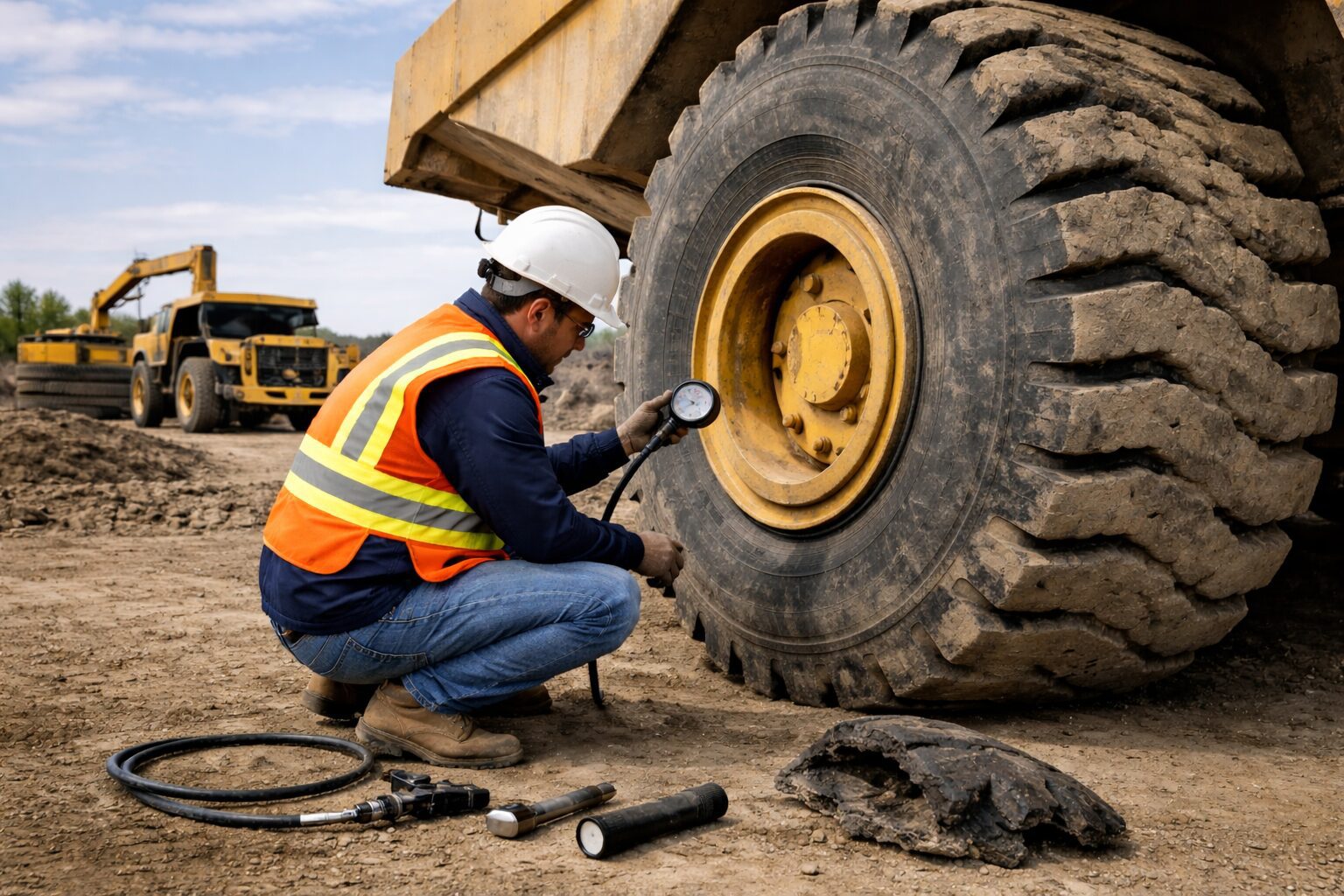
In construction, safety isn’t just a priority; it’s a responsibility shared by every worker, supervisor, and contractor on the jobsite. One often overlooked but high-risk area is tire and wheel safety on heavy equipment and haul trucks. Failures in this area can lead to severe injuries, fatalities, and costly downtime. To help address this risk, we’ve developed a practical, field-ready safety document that outlines essential practices for inspection, inflation, and blowout prevention. Download links for both English and Spanish versions are available at the bottom of this post.
Why Tire & Wheel Safety Matters
Heavy equipment tires operate under extreme conditions—high loads, long hours, and variable terrain. When something goes wrong, the results can be catastrophic. As highlighted in the document, tire failures can release explosive energy, putting anyone nearby at serious risk. The good news? Most of these incidents are preventable with proper procedures and awareness.
Start Every Shift with a Thorough Inspection
A consistent pre-operation inspection is your first line of defense. Workers should check for:
* Cuts, cracks, bulges, and embedded debris
* Uneven wear or insufficient tread depth
* Sidewall damage or separation
* Loose or missing lug nuts, bent rims, or corrosion
* Signs of air leaks
Even minor damage can quickly escalate under load. A key rule: if a tire looks compromised, don’t use it.
Inflation: Small Mistakes, Big Consequences
Improper tire pressure is one of the leading causes of failures. Both over- and under-inflation create serious hazards:
- Over-inflation increases the risk of blowouts
- Under-inflation leads to heat buildup and structural damage
Safe inflation practices include:
- Following manufacturer PSI recommendations
- Using calibrated gauges
- Checking pressure when tires are cold
- Staying out of the trajectory zone during inflation
These steps may seem routine—but skipping them can be dangerous.
Understanding and Preventing Blowouts
Blowouts are among the most dangerous tire-related incidents on a jobsite. Common causes include:
- Overloading equipment
- Incorrect tire pressure
- Excessive speed or long haul cycles
- Pre-existing tire damage
Warning signs like bulging, vibration, or rapid pressure loss should never be ignored. Removing the tire from service can prevent a serious incident .
Safe Work Practices Save Lives
Servicing heavy equipment tires is not a casual task. It requires:
- Trained personnel only
- Proper tools and restraining devices (such as tire cages)
- Full deflation before wheel removal
- Clearly defined exclusion zones
Equally important is communication—everyone on site should understand the hazards and stay clear during servicing.
Be Prepared: Emergency Response Matters
If a tire failure occurs:
- Stop work immediately
- Evacuate the area
- Report the incident
- Do not approach until the tire has cooled and been inspected
Quick, disciplined response can prevent further injury.
Key Takeaways
Tire and wheel safety comes down to three fundamentals:
- Inspect daily
- Inflate properly
- Never ignore warning signs
These simple practices can prevent life-threatening incidents and keep your crews safe. Download the full safety document below. These resources are designed for use in toolbox talks, safety meetings, and field training.