
Stored Energy and Line of Fire Hazards
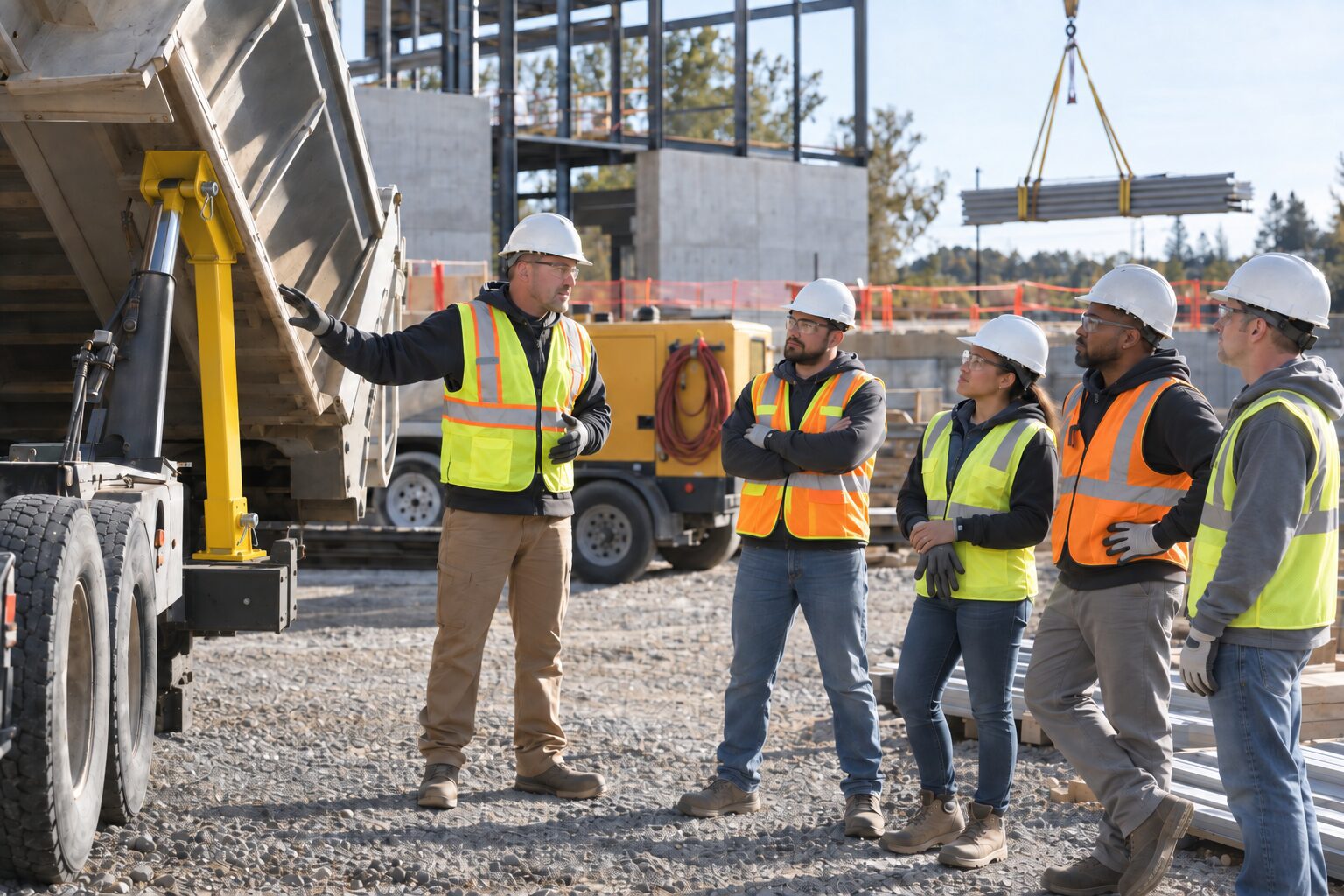
Stored energy can turn routine construction work into a serious incident in an instant. Hydraulic pressure, compressed air, elevated equipment, suspended materials, tensioned cables and other energy sources may remain hazardous even after equipment has been turned off.
When that energy is released unexpectedly, components can move, hoses can whip, loads can fall and cables can recoil. Anyone standing in the path of that movement—the line of fire—may suffer a severe or fatal injury.
Recognizing Common Sources of Stored Energy
Before servicing equipment, clearing a jam, loosening a fitting or entering a danger zone, workers should identify every energy source that could cause movement or release pressure.
Common sources include:
- Hydraulic energy: Cylinders, hoses, accumulators, jacks and raised attachments may retain pressure. A hydraulic failure can cause equipment to drift or fall, create crushing hazards or inject high-pressure fluid beneath the skin.
- Pneumatic energy: Air lines, tanks, tools, actuators, tires and couplings may remain pressurized. Sudden release can produce hose whip, flying fittings or unexpected equipment movement.
- Gravity: Raised beds, booms, buckets, suspended loads and stacked materials can fall, roll, shift or collapse. Hydraulic systems, rigging and jacks should never be treated as permanent supports.
- Tensioned loads: Cables, slings, chains, winch lines, springs, belts and bound materials can recoil when tension is released or a component fails. Workers must remain outside the anticipated snapback path.
Control Stored Energy Before Work Begins
Controlling stored energy requires more than turning off a machine. Crews should use a deliberate process before beginning work:
- Plan the task. Review the manufacturer’s instructions and the site-specific hazardous-energy-control procedure. Identify primary and secondary energy sources, including trapped pressure and gravity.
- Establish a safe distance. Barricade the danger zone and keep workers away from suspended components, pinch points, equipment travel paths and potential cable or hose recoil areas.
- Shut down and isolate the equipment. Disconnect, block, blank, chock or restrain each energy source. Apply locks and tags as required. Never rely only on a switch, valve, brake or hydraulic cylinder.
- Dissipate or restrain stored energy. Bleed pressure to a safe location, discharge accumulators, lower elevated components, install rated blocking and release tension gradually.
- Verify a zero-energy state. Try the controls, check pressure gauges and confirm that the equipment cannot move. Ensure all blocks, pins and restraints are properly positioned before work begins.
Use the Right Controls for the Hazard
Hydraulic and pneumatic systems require particular caution. Never use your hand to search for a leak. Escaping hydraulic fluid may be nearly invisible and can penetrate the skin. Use cardboard or another approved method, and treat any suspected fluid-injection injury as an urgent medical emergency.
Equipment exposed to gravity should be lowered to the ground whenever possible. If it must remain elevated, support it with rated blocks, cribbing, pins or mechanical supports placed on stable footing.
When working around tensioned loads, inspect the rigging, anchor points and connecting hardware before use. Stay outside the expected recoil path, control binder handles and release tension slowly from a protected position.
Know When to Stop Work
Conditions can change after work begins. Stop and reassess the task if:
- A load shifts or begins to settle
- Pressure unexpectedly rebuilds
- A block, support or restraint moves
- A hose or fitting begins leaking
- Rigging or an anchor point becomes damaged
- The planned work position enters the line of fire
Energy should be restored only by an authorized person after confirming that workers, tools, locks, blocks and barriers have been accounted for.
Stored-energy hazards are not always visible, but they can be controlled. Careful planning, effective isolation, proper blocking and verification of zero energy can prevent workers from being placed in the path of a sudden release.
Download the English and Spanish safety resources below!