

Severe Weather and Lightning Safety: Knowing When to Stop Work Can Save Lives
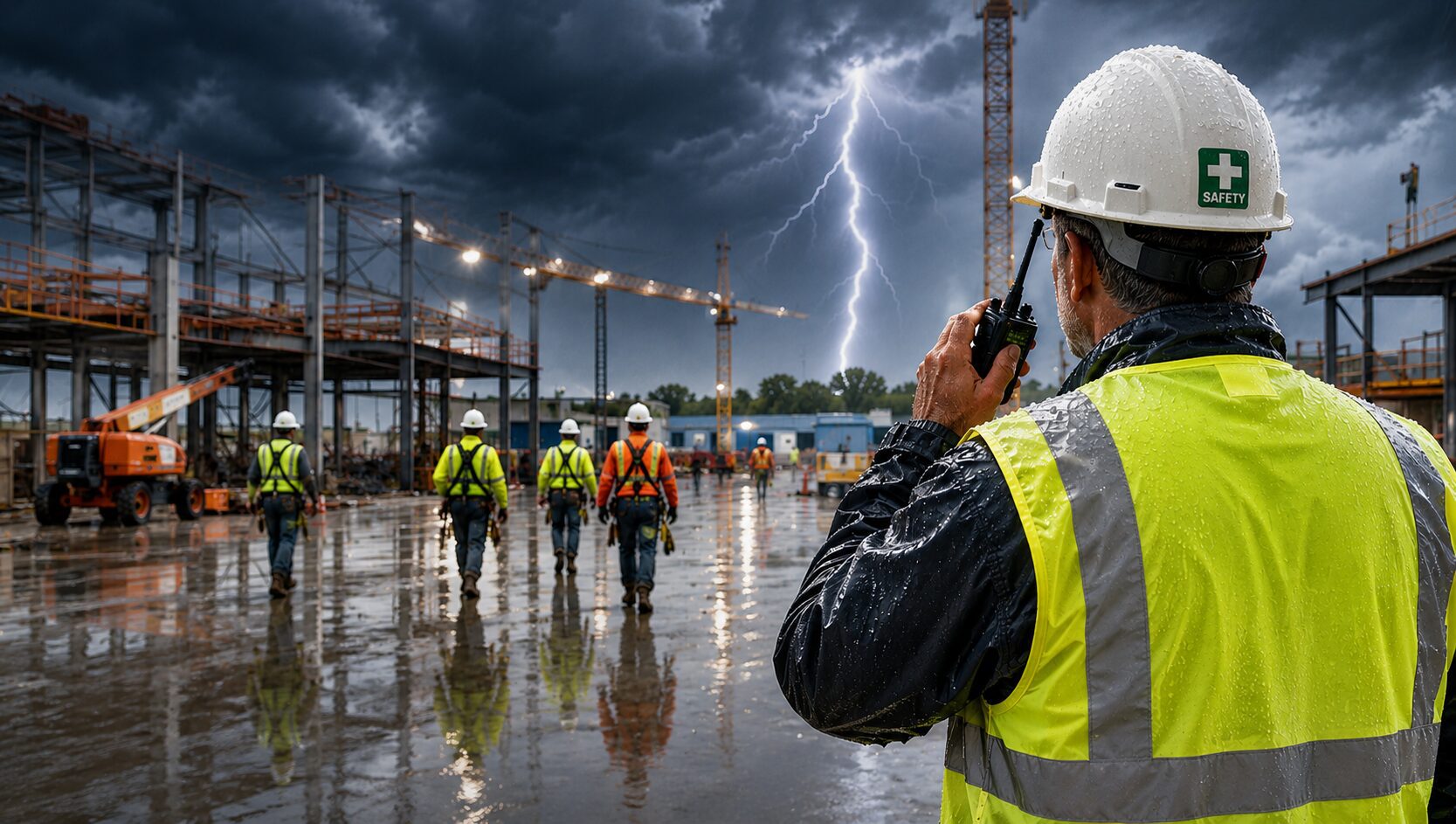
Construction crews work outdoors in conditions that can change rapidly. Thunderstorms, lightning, high winds, heavy rain, and tornadoes can develop with little warning, creating serious hazards for workers on jobsites across Kentucky.
While most construction professionals understand the dangers of severe weather, injuries and fatalities can still occur when crews delay seeking shelter, continue working during unsafe conditions, or lack a clear response plan. Having a defined severe weather and lightning response plan helps ensure that everyone on the jobsite knows when to stop work, where to seek shelter, and how to respond when dangerous weather threatens.
Monitor Conditions Before They Become Emergencies
Effective severe weather preparedness begins long before the first thunderclap. Every jobsite should designate a responsible individual to monitor weather forecasts, alerts, and changing conditions throughout the workday. Crews should remain alert for:
- Thunderstorms and lightning
- High wind warnings
- Tornado watches and warnings
- Heavy rain and flash flooding
- Hail and damaging wind gusts
One important reminder: Lightning can strike miles away from a storm. Waiting until rain begins is not a safe strategy.
Know When to Stop Work
Many severe weather incidents occur because crews hesitate to suspend operations. A clear stop-work policy removes uncertainty and helps workers make the right decision quickly. Outdoor work should stop immediately when thunder is heard, lightning is observed nearby, weather warnings affect the jobsite, or conditions create hazards from high winds, reduced visibility, or unstable work areas.
The rule is simple: If you can hear thunder, you are close enough to be struck by lightning.
Identify Safe Shelter Locations in Advance
Not all shelters provide adequate protection from lightning or severe weather. The safest options include fully enclosed buildings with electrical wiring and plumbing, substantial permanent structures, and fully enclosed vehicles with metal roofs and closed windows. Crews should avoid seeking shelter under trees, inside portable toilets, beneath temporary canopies, or in partially enclosed structures. Knowing where to go before severe weather arrives can save valuable time during an emergency.
Prepare for Tornadoes and High Winds
Strong winds can quickly turn tools, materials, and debris into dangerous projectiles. Roof work, scaffold work, crane operations, and other elevated activities may need to be suspended before conditions worsen. Every jobsite should also have a plan for tornado warnings, including designated shelter locations, communication procedures, evacuation routes, and accountability procedures for all personnel.
Download the Free Resource
To help contractors strengthen their severe weather preparedness efforts, Kentucky AGC Self Insurers’ Fund has developed a one page safety resource covering:
- Weather monitoring responsibilities
- Stop work criteria
- Lightning safety procedures
- Approved shelter locations
- Tornado response actions
- Prestorm planning considerations
A few minutes of preparation can prevent serious injuries or fatalities. When severe weather threatens, stop work, move to a safe shelter, and remain there until conditions are safe.