

Fatigue Doesn’t Announce Itself. Plan for It.
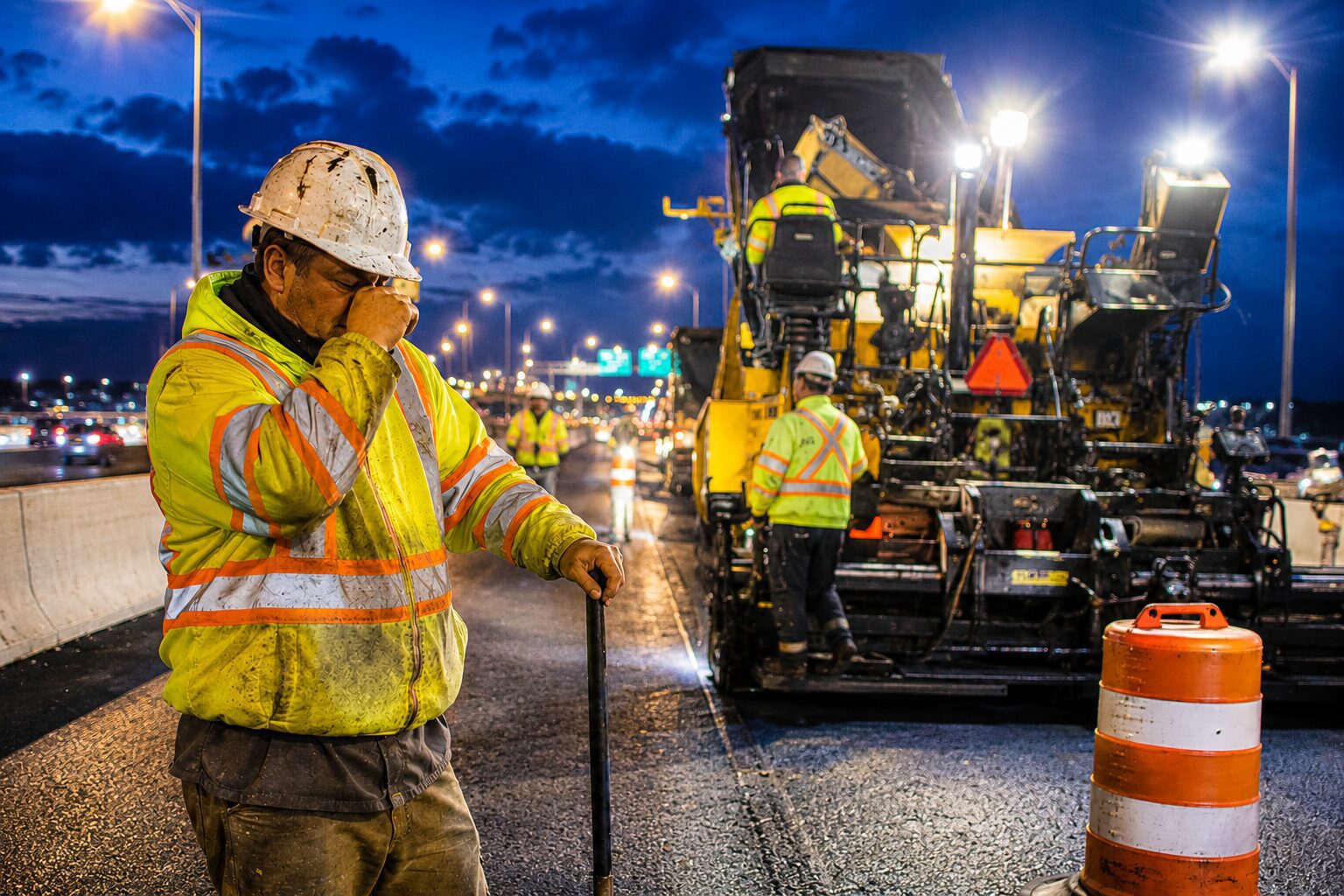
Most construction professionals know what physical fatigue feels like. But the greatest danger is often when fatigue quietly affects judgment, reaction time, and situational awareness before anyone realizes it.
Whether crews are working long paving shifts, overnight lane closures, bridge projects, emergency repairs, or extended schedules during peak construction season, fatigue can significantly increase the likelihood of incidents involving vehicles, heavy equipment, falls, and struck by hazards. Combined with heat stress and dehydration, the risks become even greater.
The good news is that fatigue can be managed. Small, practical changes can help crews stay alert and work more safely throughout the day.
Our latest safety resource, “Fatigue Management: Long Shifts, Night Work, Hydration, and Micro Breaks,” provides practical guidance for supervisors and workers, including:
- Recognizing the early warning signs of fatigue before they lead to incidents.
- Managing the risks associated with extended work hours and consecutive long shifts.
- Improving safety during overnight operations.
- Maintaining proper hydration to support physical and mental performance.
- Using brief micro breaks to restore alertness without disrupting productivity.
- Helping supervisors identify fatigue risks and make appropriate adjustments.
Fatigue is more than simply feeling tired. It is a recognized workplace hazard that deserves the same attention as any other jobsite risk. By planning work schedules carefully, encouraging workers to speak up when they are fatigued, staying hydrated, and incorporating short recovery breaks, companies can reduce incidents while protecting both their employees and the traveling public.
Download the free safety guide below and share it with your crews during toolbox talks, safety meetings, or new employee orientations.